Our story
Why I Built Project NOMAD
Information is valuable, and it should be freely available. Project NOMAD exists to make sure you always have your own copy.
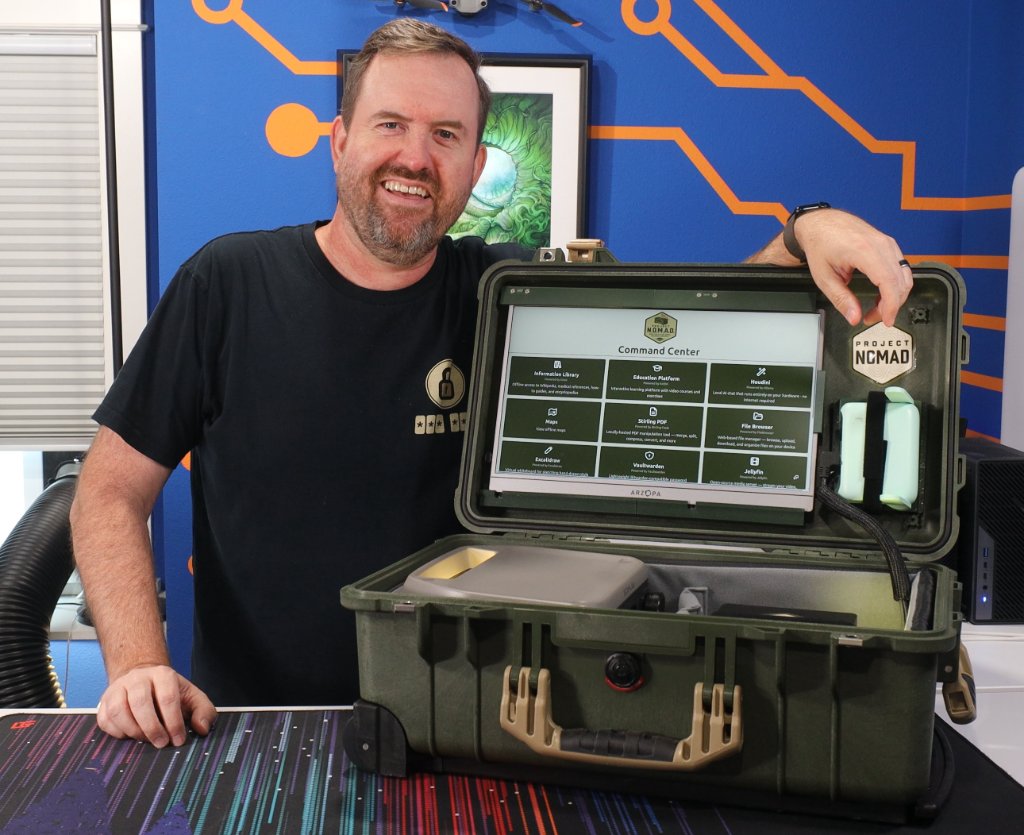
Information should be yours to own
There’s a movement toward taking ownership away from people. Music you can only stream. Video games that no longer come on a physical disc. Information is heading the same way, and I think that’s backwards. Information should be freely available for people to own and keep a copy of, and Project NOMAD makes that easy.
Where the idea came from
I don’t remember one exact moment. It came from my work with the Information Technology Disaster Resource Center (ITDRC), and from news stories about people getting cut off from the internet, like wartime scenarios where information gets locked down.
I also had to admit my own reliance on the internet, and more and more on large language models. I wanted a way to soften the damage of losing those capabilities, for any reason.
What was already out there
I started thinking about NOMAD two or three years ago and looked at what already existed. I wasn’t happy with any of it.
Some of the free options were full of useful content but looked like a 1990s website and were hard to use. The commercial products were often Raspberry Pis with Wikipedia preloaded, sold for three or four times what the parts and a couple of hours of setup are worth. I hate seeing people get ripped off.
And once you bought one, how did it stay up to date? Mostly it didn’t. You got a single snapshot and you were stuck with it. I wanted Project NOMAD to keep itself updated right up until the moment you need it offline, so your copy of the world’s knowledge is as current as it can be.
People want the tool, not a lesson
If there’s one thing I’ve learned from over a decade of teaching people tech on YouTube, it’s that most people don’t want to learn something. They want to be told exactly how to do it.
Take a Pi-hole. You have to get an operating system onto a Raspberry Pi, update it, install and configure Pi-hole, and then reconfigure your network to use it. That’s an intermediate project for tech-minded people and a wall for most everyone else. When I make a tutorial, I build it so a non-technical person can probably get through it even if they don’t understand every step. Sometimes people don’t want to become an expert. They just want the thing.
That’s the lens Project NOMAD was built through. Make it as user friendly as possible, so people simply have the tool instead of having to learn a new one.
What made it click
It all came together with the rise of offline AI models. Having a copy of Wikipedia is one thing. Having an assistant that can reason over your content and pull out what matters for your particular situation is a whole other level.
At the same time, AI coding tools like Claude gave me abilities I didn’t have before. I could actively develop Project NOMAD myself without a formal development background, with my developer overseeing everything that lands in the live version. We started development about a year before release.
That also changed the hardware. Instead of a lightweight Raspberry Pi, NOMAD is designed for robust hardware, so it can run a local AI assistant over everything on the box. As user friendly as possible, and as powerful as possible.
Interestingly, there’s also a real and visceral reaction to anything AI-related. Some people love it, and some people hate it. In my view, AI is a tool like any other, and it can be used for building or for destruction depending on who’s wielding it. Because we want Project NOMAD to be flexible for all users, the AI capabilities are completely optional.
Who it’s for
I built it because I wanted it for myself. I figured a huge portion of the population would want it too, once they understood what it provides.
That means homesteaders. Places with unreliable internet. Disaster scenarios. Governments that cut off the internet or lock down information. And people all over the world, not just here in the US.
Why it’s free, and always will be
I have never once considered charging for Project NOMAD, and I never will. Access to critical information shouldn’t be gated off for only those who can afford it.
NOMAD is built on a ton of other free, open-source projects, and it’s 100% open source itself so the community can keep building on it.
The name
Project NOMAD came from workshopping ideas until one felt right. Nomads are highly capable because they have to be. Their survival depends on it.
Picture a nomadic group after the zombie apocalypse that has finally found enough community to start rebuilding life the way it used to be. A NOMAD server would be priceless to them, touching everything from keeping people alive to education to entertainment.
What happened next
It was a passion project on the side: something I wanted to see built, and I had the means to build it and give it away. Very much “if you build it, they will come,” with no clear end goal.
Then it became far more popular than I expected. What surprised me most was the global response. It went viral quickly, which told me it struck a chord. A lot of people are preparing for the future right now, and having a NOMAD box set up and ready gives them peace of mind that they have a backup of much of the world’s knowledge.
I’m in this for the long haul, and we’re going to keep making it better. We’re striving to make NOMAD accessible to everyone, no matter where they live or what language they speak.
Let’s share something
Project NOMAD exists because information is valuable and should be freely available. We’re living in a time when the opposite is happening, and I want NOMAD to buck that trend in its own small way.
We’re surrounded by community: locally, nationwide, and globally. We’re all here together. Let’s share something.
Chris Sherwood
Creator of Project NOMAD